


Sushmitha Suresh
Bharatanatyam Artiste, Founder & Artistic Director, Vivartana - The Art Studio
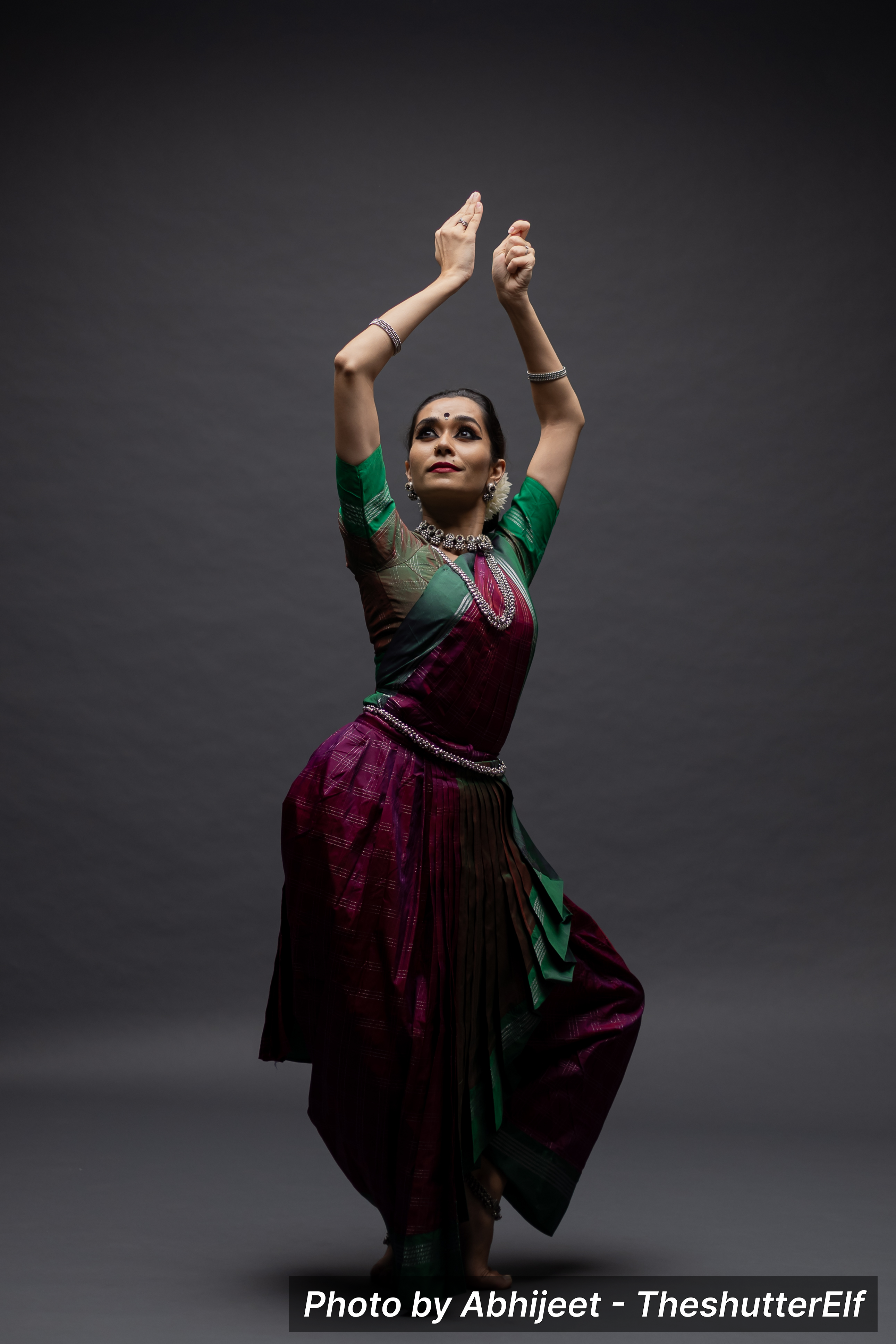
In a recent post on Instagram, your caption used the word “becoming” in the context of a mother. Talk to us about that word…
Watch Sushmitha respond to the question above
‘Becoming’ in the context of motherhood to me is less about arriving at a final version of yourself and more about being reshaped in real time, on-the-go! It is becoming softer AND stronger at once, it is becoming gentler AND fierce at once, becoming someone who can function on empty and still fully love, becoming unfamiliar to yourself on some days yet so clear on some others, becoming more honest And clear about priorities, becoming split between who you were and who you NEED to be for your child, becoming everything you NEED to be as the primary caregiver AND finding and navigating what you WANT to be for yourself too.
Motherhood isn’t a transformation that happens at birth but it is a continuous unfolding and the BECOMING for me, begins at the junction of the NEED to be and WANT to be and somehow fighting to find balance. A rebuilding. A surrendering.
What shifted in your inner world after becoming a mother, especially in how you relate to dance?
Becoming a mother clarified everything. My priorities sharpened in a way nothing else had before, and dance — rather than fading into the background — rose to the surface with more meaning and depth than I had ever known. My time became precious, which made every moment I spent dancing intentional. I stopped taking it for granted. Dance became less of a routine and more of a necessity — a space that is wholly and unapologetically mine.
Watch “Becoming”, a Short film by Sushmitha Suresh
What parts of dance feel different to you now — your why, your joy, your ambition, or your sense of identity?
My why has not shifted, but it has intensified profoundly. I dance to connect deeply with myself — to go inward, to understand myself at my core — and then to share that authentic self selflessly with anyone whose life brushes against mine. Motherhood didn’t change this purpose; it made it clearer, more urgent, and infinitely more purposeful.
My joy hits differently now — it’s more intense, more pronounced, louder than ever, clearer than ever. My ambition has redirected and softened in some ways while growing in others. What’s crystal clear now is the focus: I know exactly why I dance and what I intend to do with this art form. Every choice is now aligned with that core why.
As for my identity — I am both the same dancer and someone entirely new. My body carries the familiarity of muscle memory; that foundation hasn’t changed. But the spirit moving through that body is fiercer than ever — there’s a freshness, a grit, a fire in how I return to dance now that wasn’t there before. I move with an intensity and purpose I didn’t know was possible. Motherhood didn’t erase who I was — it ignited who I’m becoming.
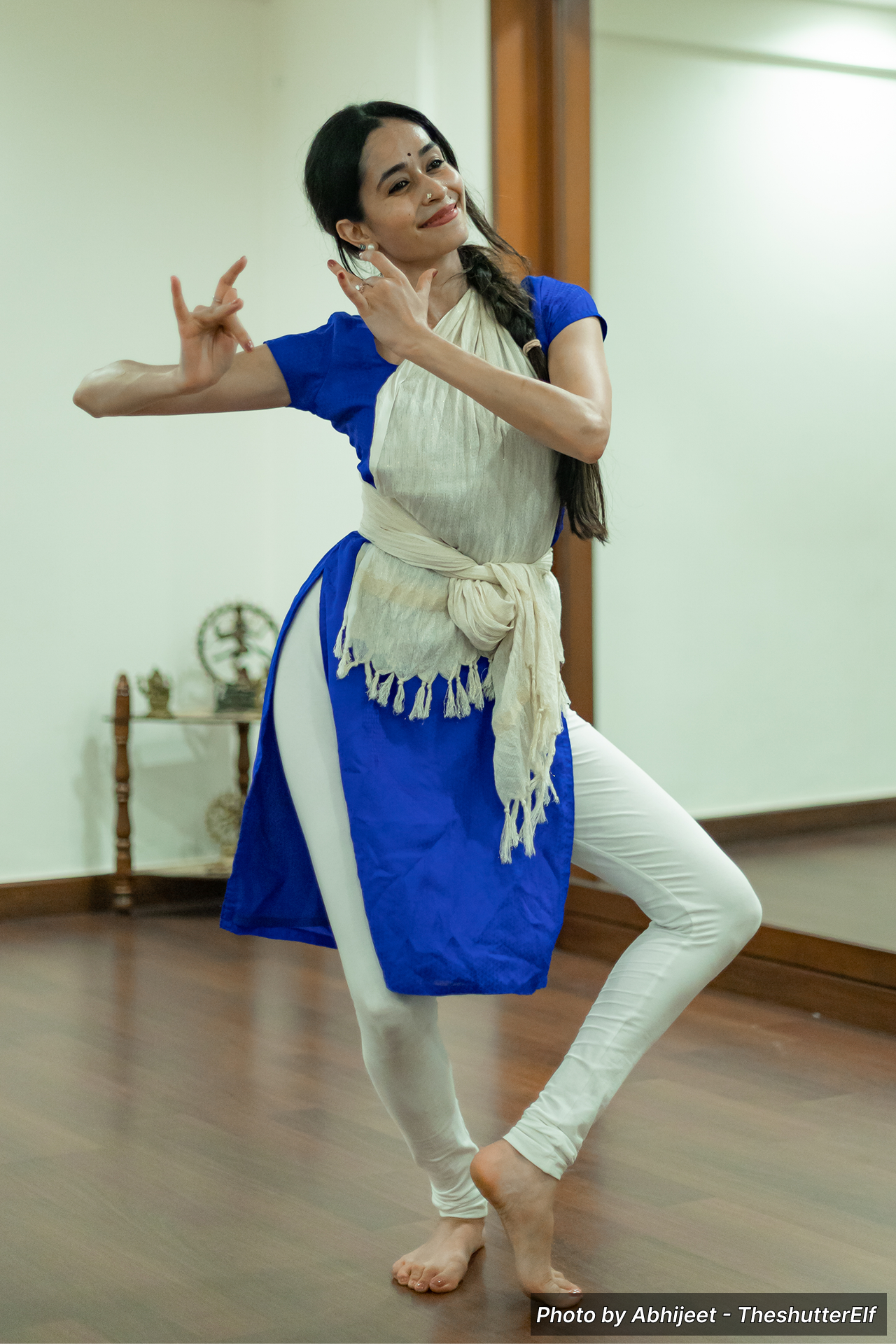
Sushmitha practicing at Vivartana - The Art Studio, Bangalore
How has your body changed after giving birth, and how are you learning to listen to it with more compassion?
Listening to my body has always been central to my practice as a dancer. But childbirth completely transformed that relationship. I witnessed first-hand what my body could endure, give, and do. It’s not just about alignment or technique anymore — it’s about reverence.
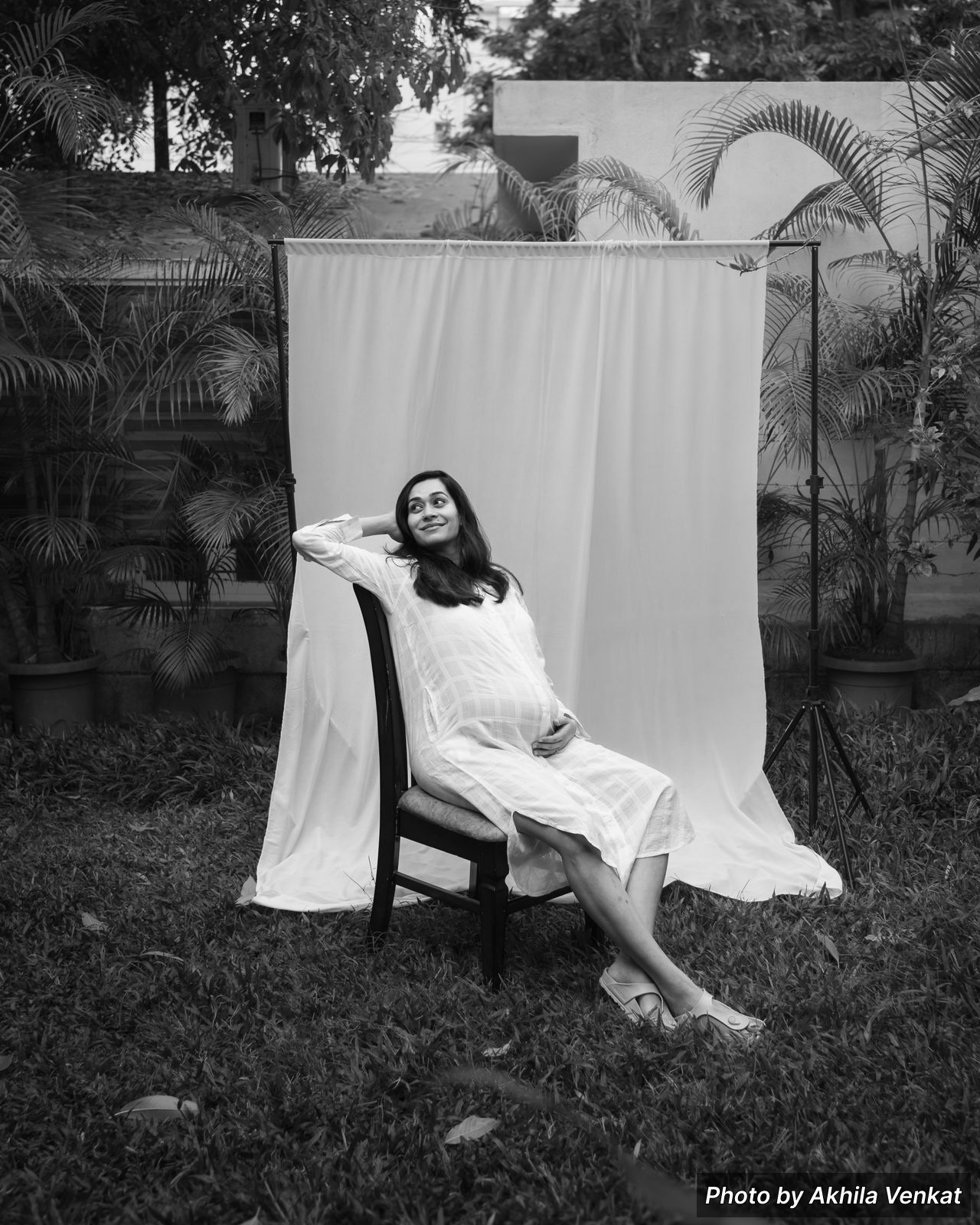
Sushmitha Suresh during her pregnancy
I see my body now with profound gratitude and awe for its strength, its resilience, its capability. And through it all, I was held — in love, in support, in vulnerability. That experience fundamentally changed how I move and how I honour myself.
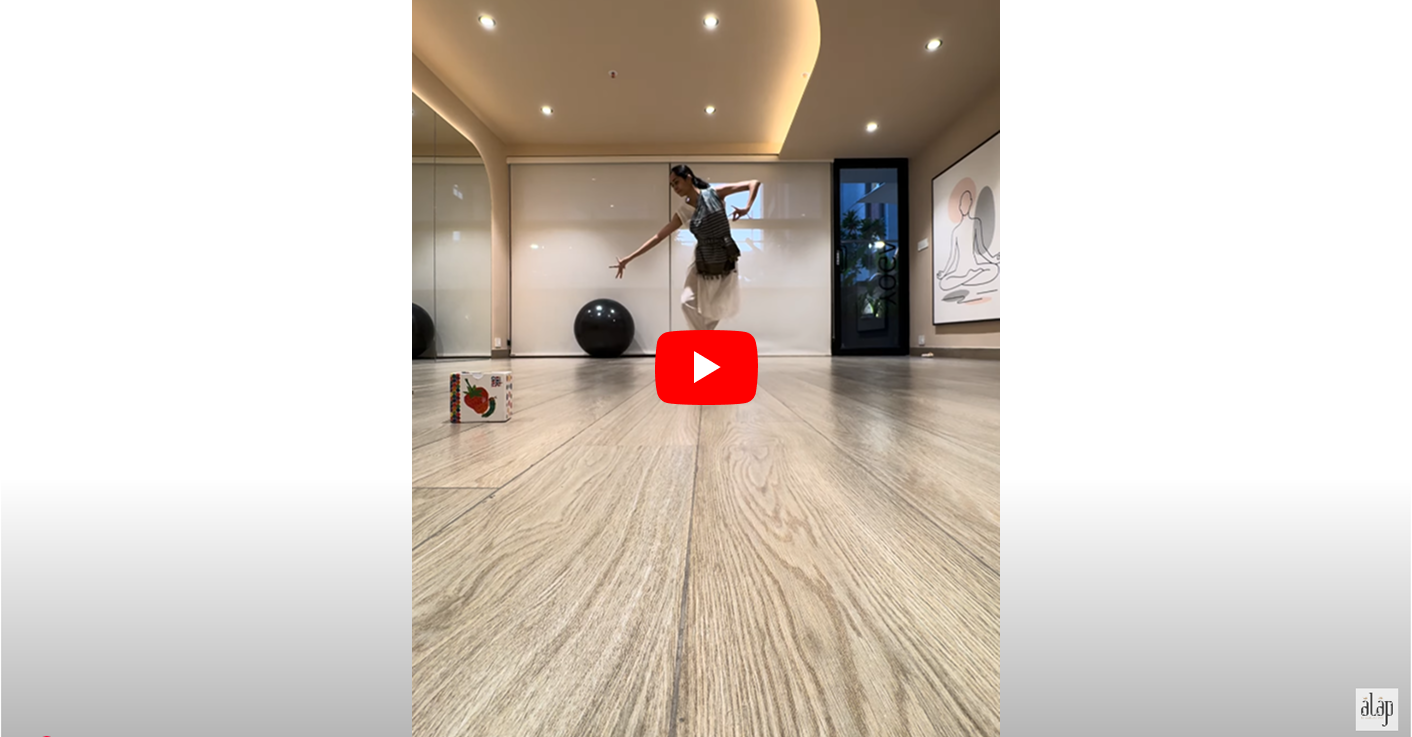
Watch Sushmitha dance with her baby in her studio space
What did rebuilding strength and stamina look like for you — physically and emotionally — without rushing yourself?
Rebuilding strength and stamina postpartum required radical patience. It was about repetition, going slow, and completely recalibrating my expectations. I had to learn to listen to what my body wanted and could do each day, each practice — not what I thought it should do. There was no rushing, no forcing.
But here’s what sustained me: my body remembered. The muscles remembered. Yes, there was a pregnant body, a postpartum body — they were different. But the years of training, the countless hours spent in the studio, never left me. That foundation showed up in the most beautiful, unexpected ways. My body could breathe, expand, and move in ways I didn’t know were possible. All those years weren’t wasted — they were waiting to reveal themselves again.
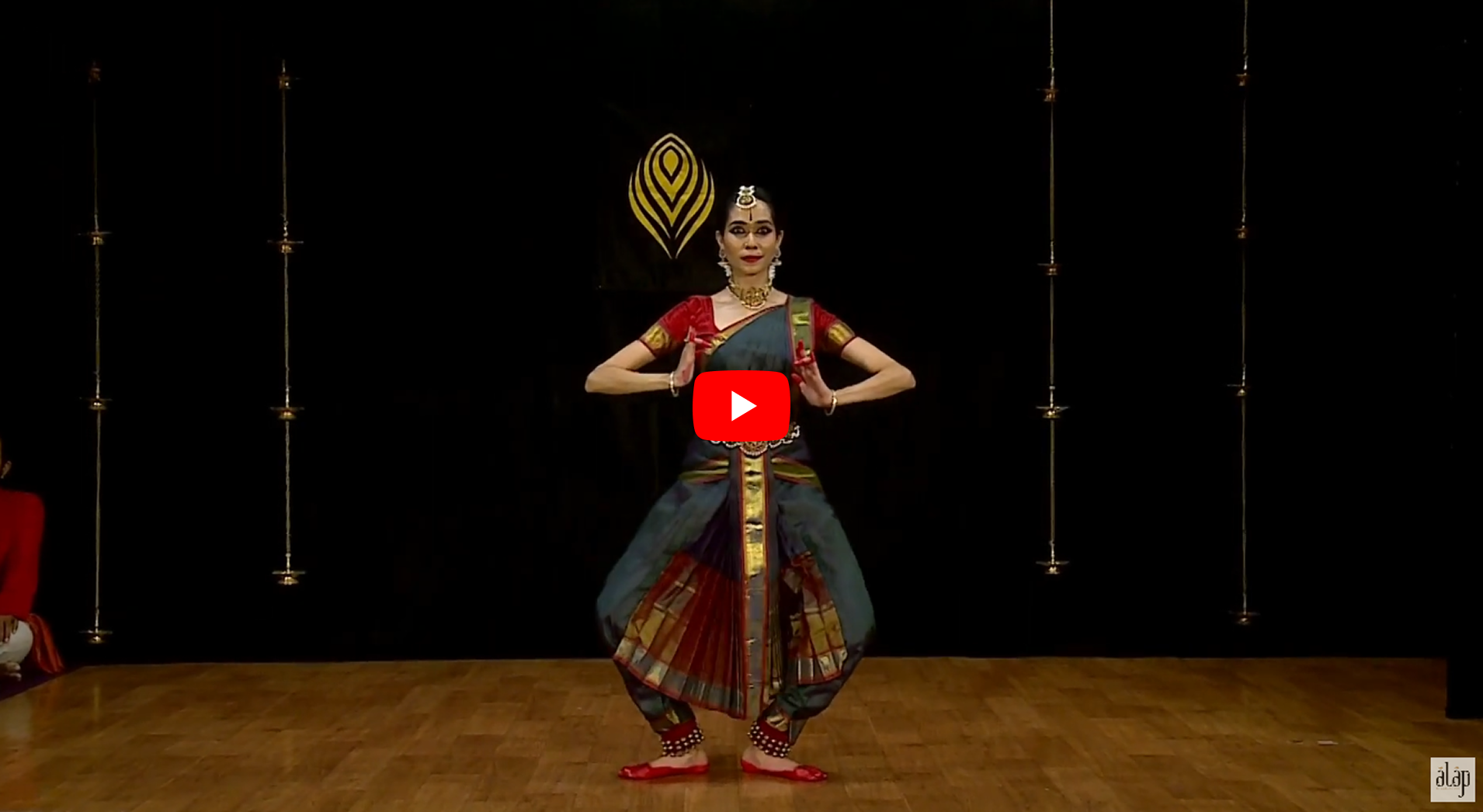
Watch Sushmitha Suresh perform a Jathi from a Varnam
What was the postpartum period like for you, and what supported you most? When dance showed up, how did it help?
The postpartum period was a rollercoaster with no time to process anything because I was completely consumed by caring for my baby. Family was my biggest support — I am deeply grateful for that grounding.
But what surprised me was that dance never really left me, even when I wasn’t physically in the studio. It was there through pregnancy, through my baby’s birth, through those early weeks and months with my baby. Dance continued to be by my side in whatever capacity it could be. I kept knocking on its door, over and over, until eventually my body was ready to step back into practice. When it finally happened, it felt like coming home.
What was it like returning to dance for the first time after childbirth?
My first attempts at returning to dance were marked by fear. I was afraid my body wouldn’t be able to keep up with the rigor of practice I’d always known. So I retreated. But eventually, I learned to be patient with myself — to give my body time without forcing it into something it wasn’t ready for. That shift from fear to patience changed everything.
Revisiting pieces that lived in my deep muscle memory was a mix of nostalgia, excitement, thrill, joy, and overwhelm all at once. But what shocked me most was what my body could actually do. I sustained an entire Tishtra Alaripu without stopping. My body remembered. It showed up with stamina and strength I wasn’t sure it still had. That realization was mind-blowing and exhausting in the most beautiful way.
Emotionally, returning to dance as a mother has been an absolute rollercoaster. My mind runs with a million tabs — all the needs of motherhood, all the thoughts I can’t switch off. Trying to be present and connected to my body whilst managing that mental noise is challenging. I’m still navigating it, but it gets better with each passing day. The practice of showing up, even when it’s messy, is slowly teaching me how to find my way back to myself.
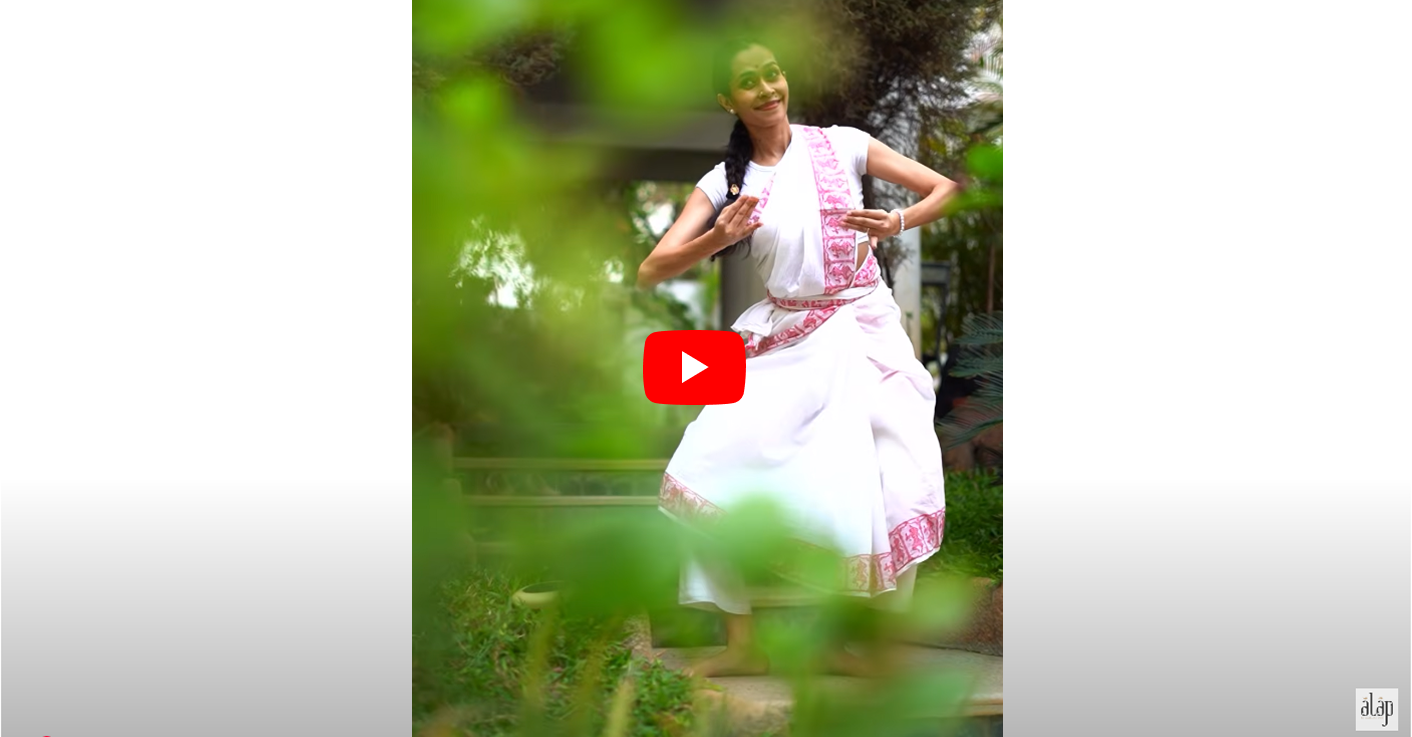
An excerpt of Sushmitha dancing to a Thillana, as part of her #musclememorymonday series
Has motherhood changed how you see your relationship with children, your students, and the next generation?
Motherhood completely transformed how I teach. I now approach my students with deeper intention — I collaborate with their ideas and genuinely listen to what the current generation thinks. Rather than teaching the way I was taught, I repackage my knowledge into structures that feel relevant and alive for them. I’m trying to ignite the curious minds that will shape the future of dance. Teaching isn’t just about passing on technique anymore — it’s about nurturing their voices and ideas.
What do you wish people understood about dancer-mothers, and what would you say to a dancer about to become a mom?
There is no question of losing your art. It will always show up in the ways it’s meant to, and it will choose its own timing. To any dancer who’s scared about becoming a mother, I’d say: breathe through the fear. Embrace it.
As dancers, we’re already sensitive and vulnerable to so much around us — motherhood amplifies that even more. Being a mother doesn’t take dance away — it makes you feel even deeper. Dance becomes richer, more intentional, more you. Your art isn’t going anywhere. It’s just waiting to reveal itself in ways you never imagined.